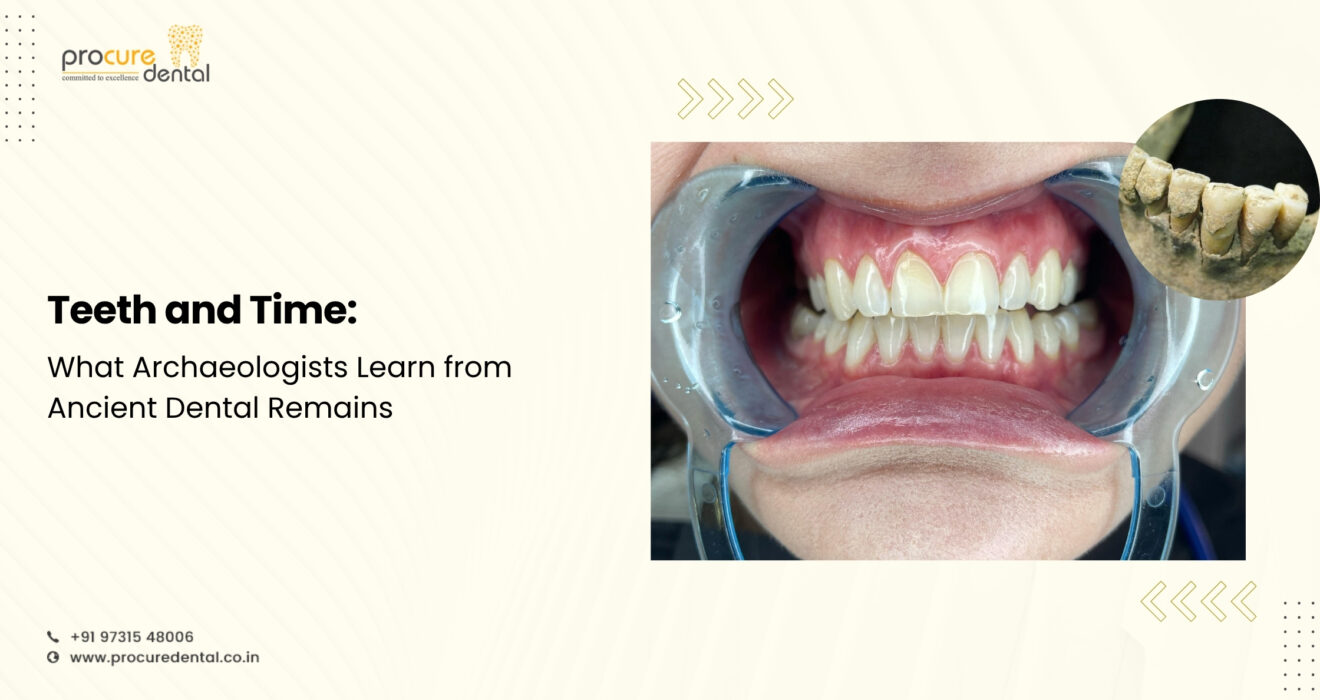
Teeth and Time: What Archaeologists Learn from Ancient Dental Remains
What Archaeologists Learn from Ancient Dental Remains When we think of archaeology, we often picture towering ruins, dusty bones, or long-lost artifacts.. But one of the most telling remnants of ancient lives is something far smaller and more personal—teeth. These tiny time capsules can survive for thousands of years and reveal an astonishing amount about the people who once used them.
Why Teeth Matter in Archaeology.
Teeth is incredibly durable. Unlike most parts of the human body, they resist decay, environmental damage, and the passage of time. Enamel, the hard outer layer of teeth, is the hardest substance in the human body. As a result, teeth often outlast bones and are frequently the best-preserved part of an archeological skeleton.
But teeth are more than just durable. They are detailed records of a person’s life—where they lived, what they ate, how old they were, and even what illnesses or traumas they experienced.
Clues Hidden in Enamel
As children grow, their teeth form in layers, a bit like the rings of a tree. This process locks in chemical signals from their environment and diet. By analyzing these layers, scientists can figure out what kind of food people ate—whether it was plant-based, meat-heavy, or marine-based. Isotope analysis, particularly, can help archeologists identify where a person grew up or if they moved around during their lifetime.
Decoding Diet and Health
Tooth wear and cavities offer direct clues about diet. For example, heavily worn molars might indicate a diet full of tough, fibrous plants, while a mouth full of cavities could point to a high-sugar or starchy diet—possibly after the advent of agriculture or trade.
Tooth decay, abscesses, and enamel hyperplasia (thin or missing enamel) also provide insight into the health and nutrition of ancient communities. Periods of malnutrition or illness often leave visible marks in developing teeth, giving researchers a timeline of stress and recovery during a person’s childhood.
Social Clues and Cultural Practices
Beyond health and diet, teeth can also reveal cultural behaviors. In some ancient societies, people filed, drilled, or even decorated their teeth for cosmetic or ritual purposes. Evidence of this can show how people expressed identity, social status, or religious beliefs.
Even dental care can be part of the picture. Early forms of dentistry—like drilled teeth found in Neolithic remains—show that people were treating tooth problems as far back as 9,000 years ago.
Piecing Together the Past
Dental remains do not just tell us about individuals—they help paint a broader picture of entire communities. By examining teeth across many skeletons, archeologists can compare diet between the wealthy and the poor, men and women, adults and children. This kind of analysis can uncover social inequalities, migration patterns, or major shifts in food sources due to trade, climate change, or conquest.
Final Thoughts
Next time you think about archeology, don’t overlook the teeth. These small but mighty remains are helping scientists answer big questions about ancient lives—how people lived, what they valued, and how they adapted to the world around them. In the end, our smiles may outlast us, telling our stories long after we are gone.